05 · Beyond the note · Heidi web
Beyond the note
Heidi is becoming an AI care partner for the full clinical day: coding, tasks, documents, integrations. This is the section where my point of view meets your product.
At a glance
The encouraging finding: as Heidi expands past the note, the system mostly holds. One shell absorbs each new job, so every new capability inherits the last one's clarity. That is coherence coming from a system rather than from one person's hand, which is exactly the thing I believe this role is for. The opportunity is to keep it that way, and to revisit a note-centric architecture now that the unit is becoming the day.
Let everyone build and a product grows the way a city does: fast, and prone to sprawl. The question is whether intent holds the shape. Across the new surfaces, I looked for whether they feel like one product, with the lens that every new capability should feel like it belongs to the same care partner.
One shell, doing many jobs
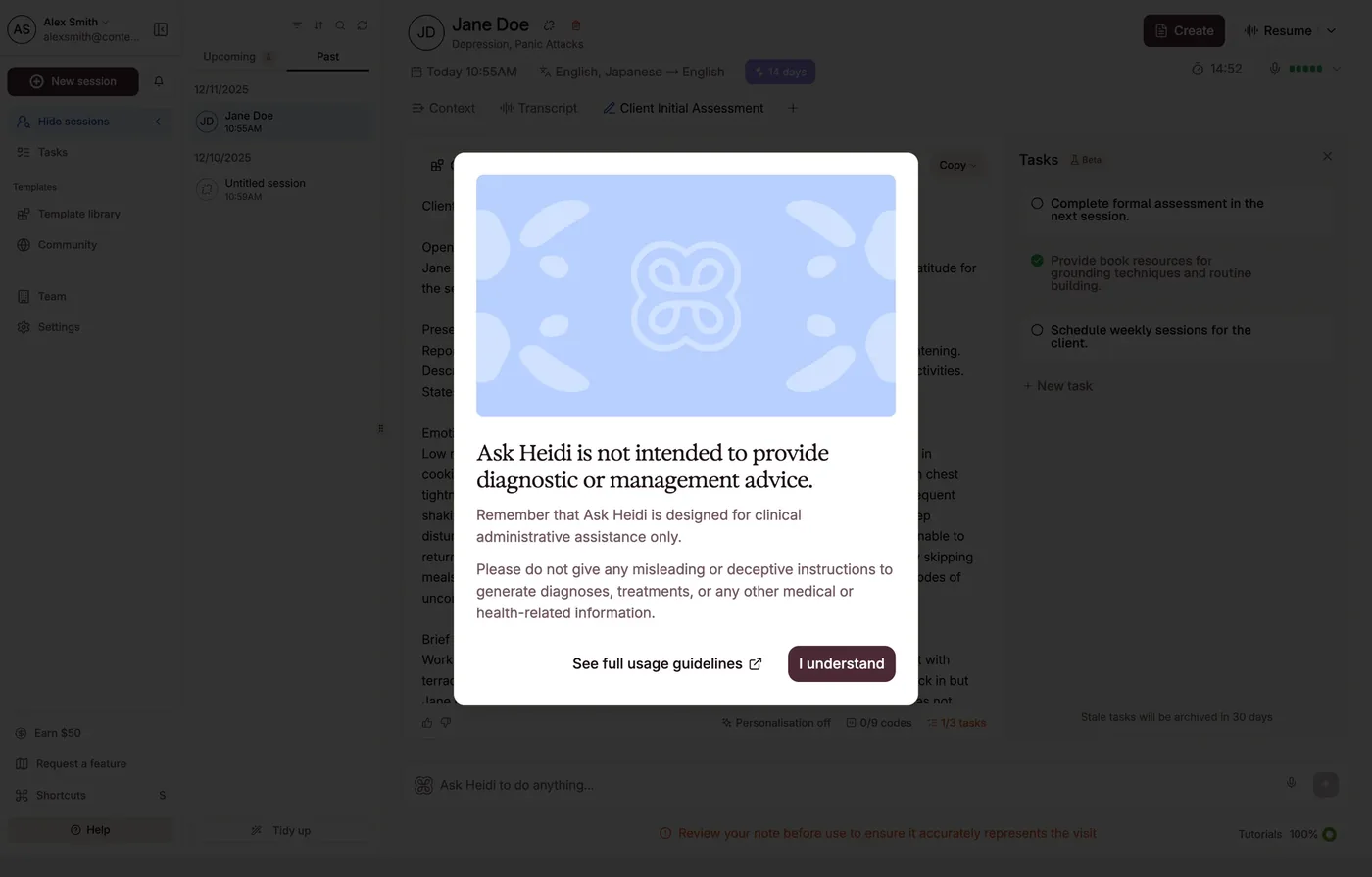
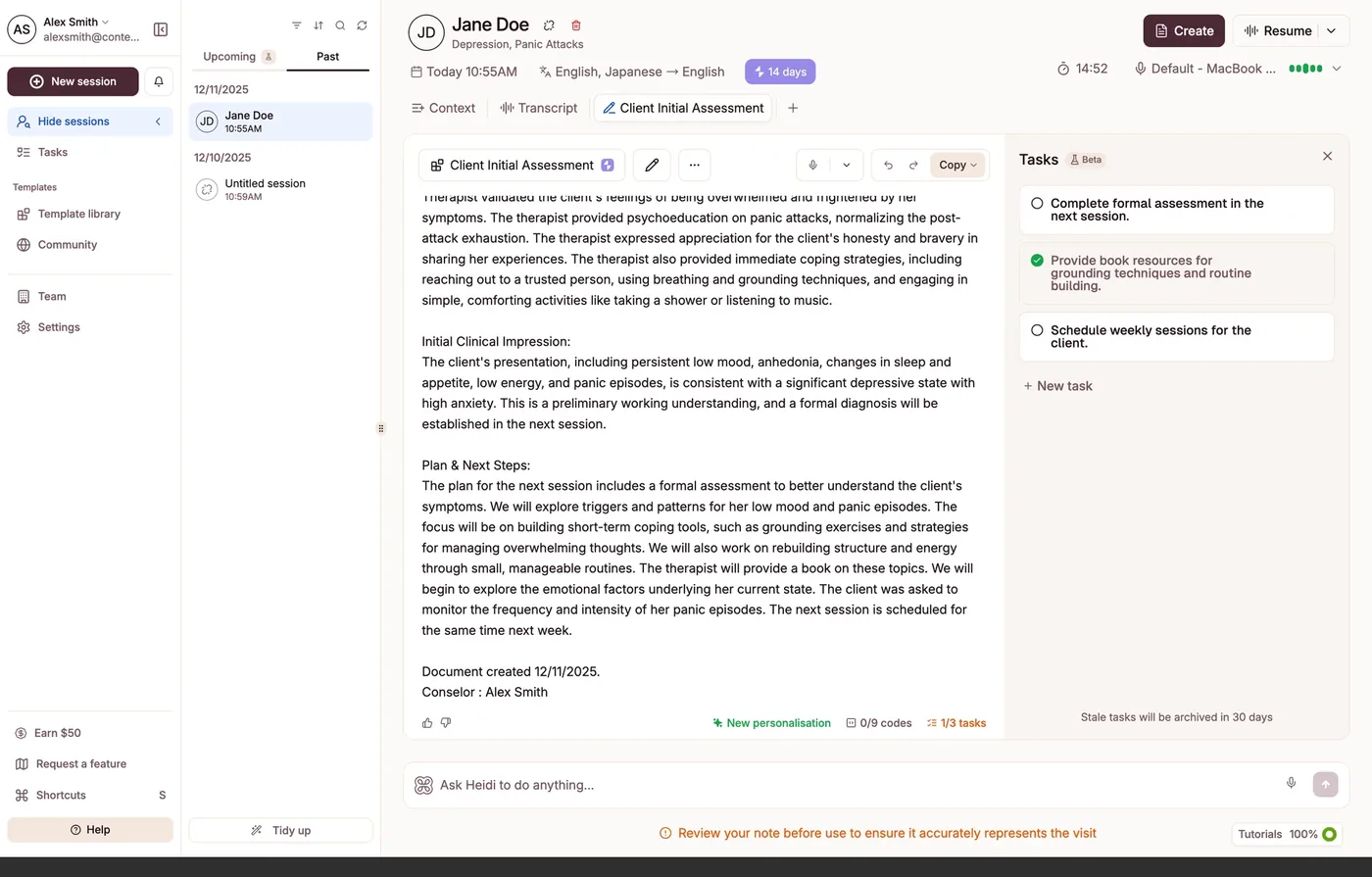
Medical coding shows up the right way: as a panel on the note, in the same shell as everything else. A clinician who learned the scribe is never lost in coding, because the furniture has not moved. This is the system working. It is unglamorous, and it is one of the most important things a growing product can get right: the coherent choice as the default, so each new capability inherits the last one's clarity.
- The lens
- The product should feel like one coherent hand
- What works
- New capability, familiar shell.
- What I'd propose
- Protect this. The reason it holds is that someone is making each new surface reuse the system. That job only gets harder as the team and the surface area grow, which is exactly why I'd give it an owner and let the design system carry more of the judgment.
The note is quietly becoming a platform
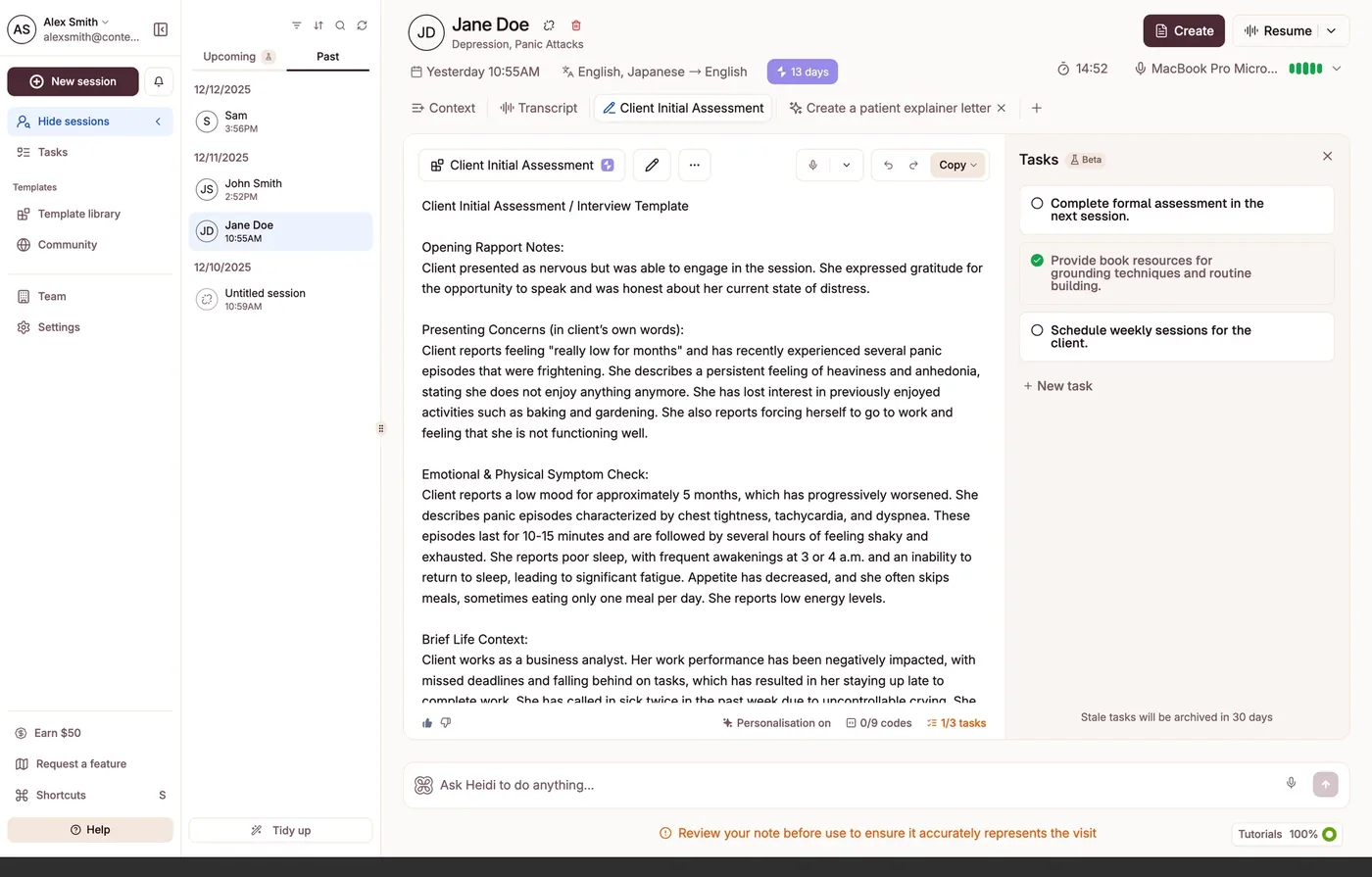
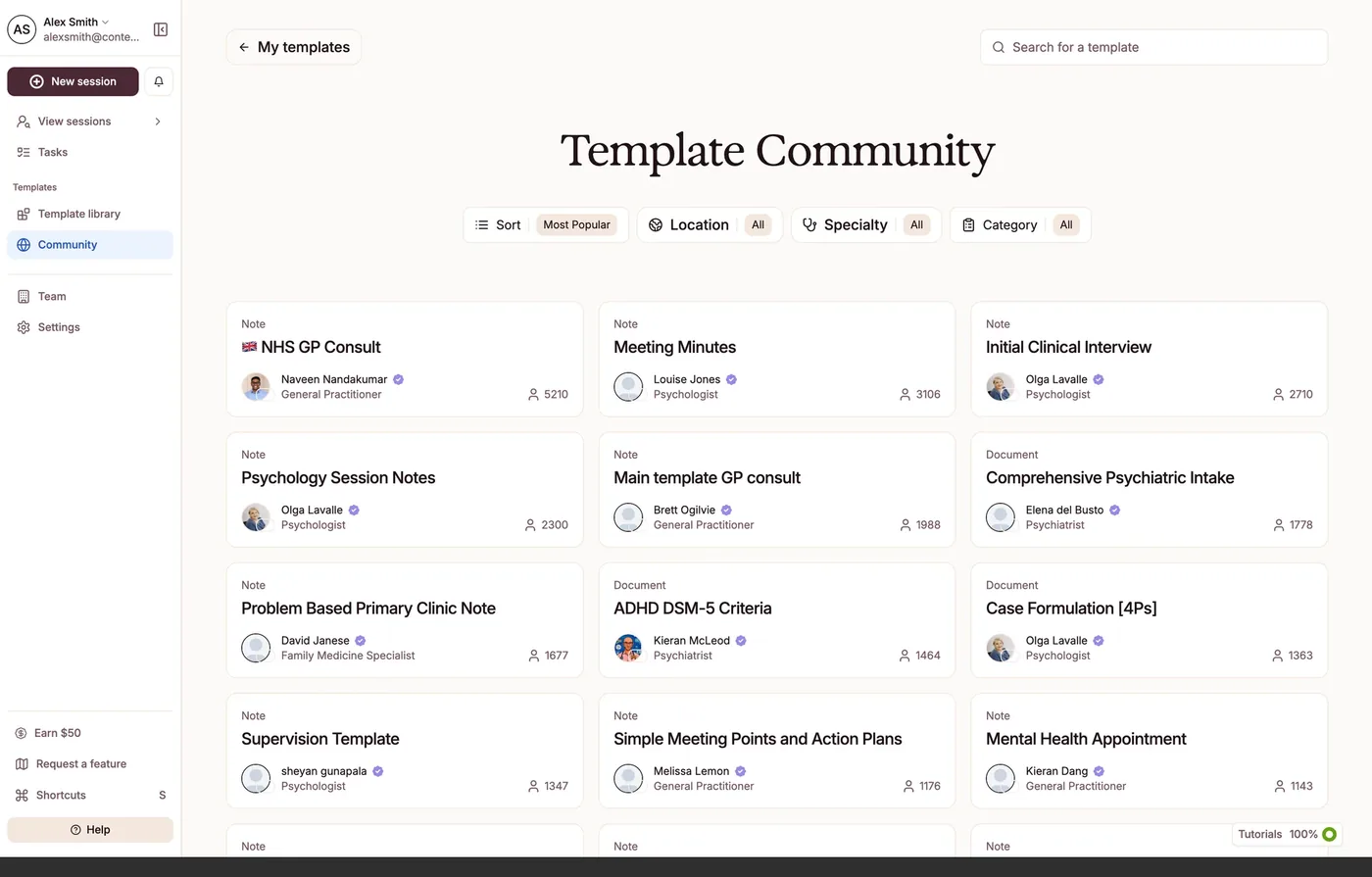
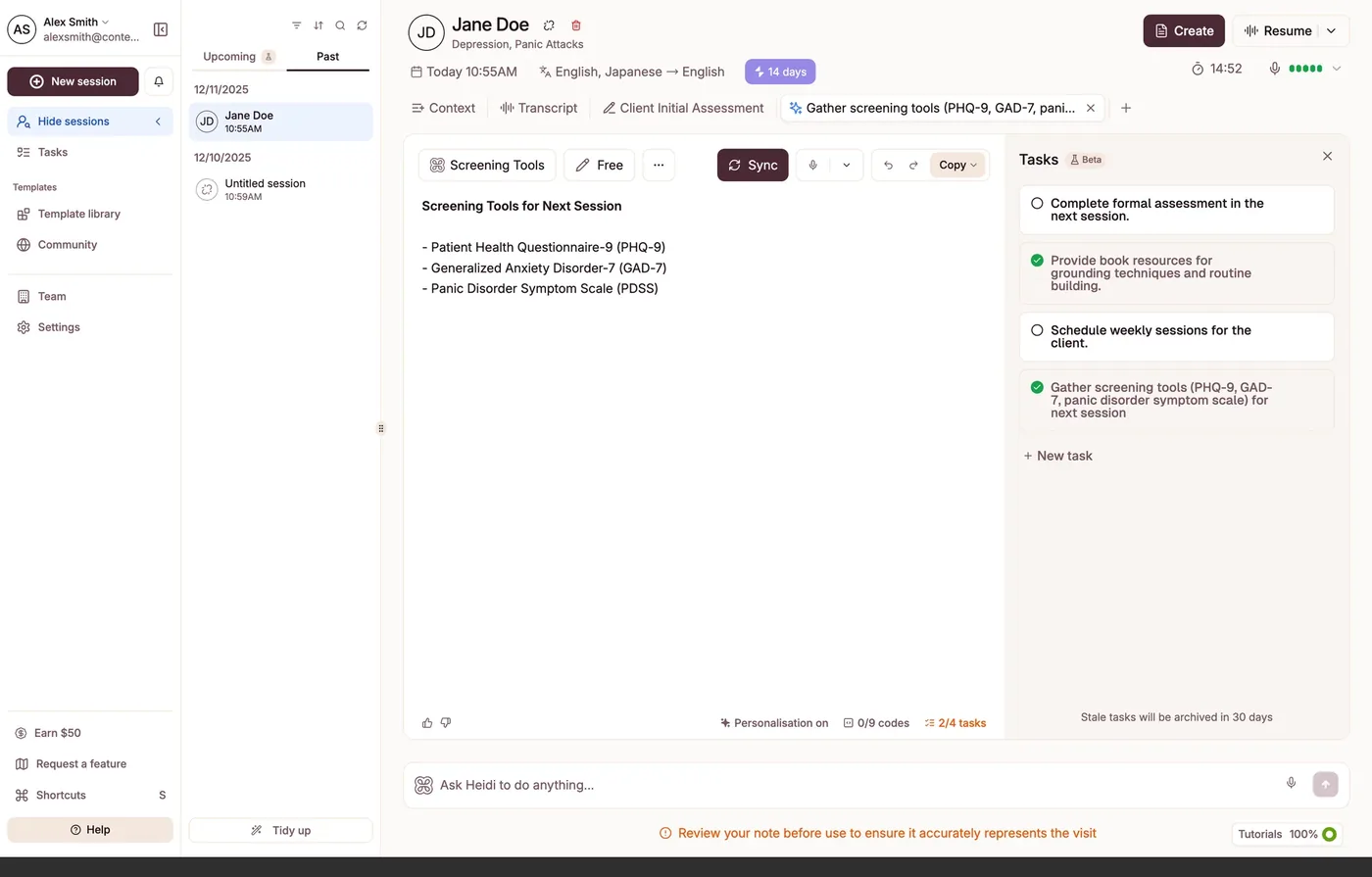
Letters, referrals, patient explainers: Heidi now produces a growing family of artifacts, not just the note. Each is generated cleanly and reads well. Each one also stretches a model that was designed around a single document. The more the product makes, the more the note becomes one output among many rather than the centre, and the architecture is being asked to carry a question it was not originally shaped for.
- The lens
- The product should feel like one coherent hand
- What works
- Clean generated artifacts.
- The opportunity
- A note-centric model, stretching.
- What I'd propose
- I'd decide, deliberately, what the unit is. If it is the clinical day and not the note, the information architecture can say so, with the note as one valuable output among several rather than the room everything else hangs off.
Wiring into the day, one logo at a time
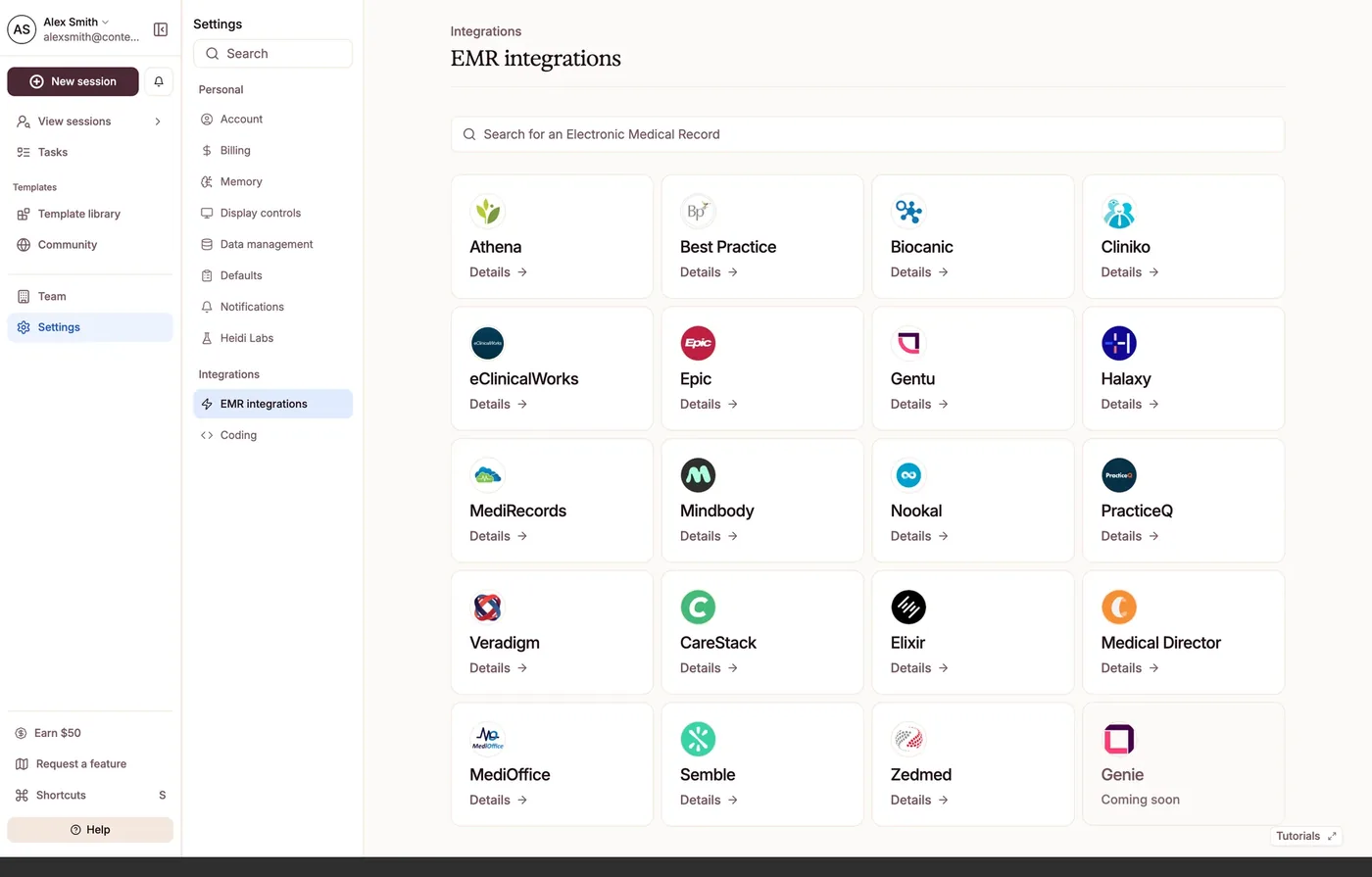
Owning the clinical day means connecting to the systems that already run it: EHRs, practice management, evidence sources. The integrations grid is clean and the ambition is right. It is also the clearest preview of the sprawl to come. Every integration is a new surface, a new edge case, a new seam where the experience could fragment. This is where the design system does its real work, carrying the clinician's flow and the patient's data across each boundary with the same care as the core loop.
- The lens
- Every seam is a trust boundary
- What works
- Clean grid, clear ambition.
- The opportunity
- Every connection is new surface area.
- What I'd propose
- Treat the design system as the city plan for this expansion: the tokens, patterns, and guardrails that let coding, documents, comms, and every integration grow while the product keeps feeling like one thing.
Where I'd start
- 01
Name the unit. Note, or clinical day? I'd decide it on purpose, and let the information architecture follow before the answer is decided by accretion.
- 02
Fund the system as infrastructure. The one shell is why the expansion has not hurt yet. I'd make that an explicit, owned investment, not a happy accident.
- 03
Get ahead of integration sprawl. Define the patterns now, while there are dozens of surfaces, not hundreds.
This is the heart of why I want the job. Heidi is at the exact moment where a product becomes a platform, and coherence stops being free. The work is to make the coherent choice the default for everyone who ships, so the day, not the note, can feel like the work of one person. Expansion is a design opportunity, and a good one.
The review
The detailed design review