03 · Templates · Heidi web
Templates
The most-praised part of the product, and the most complex. It is also where Heidi quietly stops being a tool and becomes a platform.
At a glance
The closest thing Heidi has to a moat, and the design mostly earns it. The library is a genuine ecosystem and the preview-before-adopt is thoughtful. This is also where design and clinical governance start to meet: as community-authored content becomes more central, provenance and review signals could become part of the experience itself, and the jump from using Heidi to authoring in it is a seam worth softening.
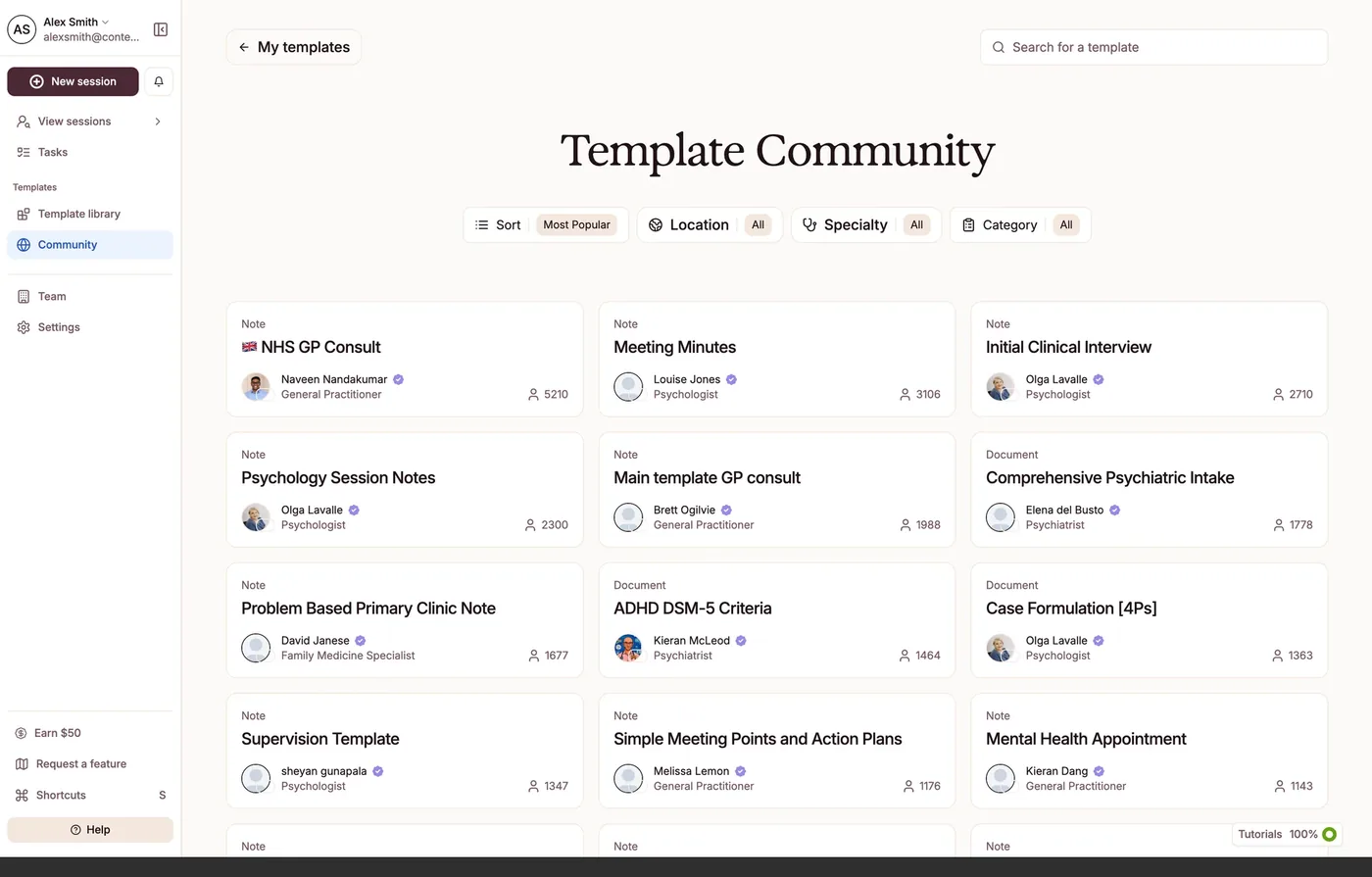
A real ecosystem, with room for trust signals to grow
The Template Community is a browsable, searchable, specialty-filtered marketplace of clinical templates, each with an author and a copy count. This is the network effect: breadth Heidi could never author alone, and one competitors will struggle to match. The layout is clean and editorial, and it fits the brand. These are community-authored clinical documents, and right now the main signal of quality is popularity. In clinical content, popularity may be useful, but on its own it may not be enough.
- The lens
- Governance should increase confidence, not friction
- What works
- Real ecosystem and network effect.
- The opportunity
- Make provenance part of the experience.
- What I'd propose
- I'd treat the library as the product it is becoming, and explore how provenance and verification become visible without slowing the clinician down: authorship and review signals on community templates, organisations curating trusted sets, and real discovery before a few hundred templates becomes a few thousand.
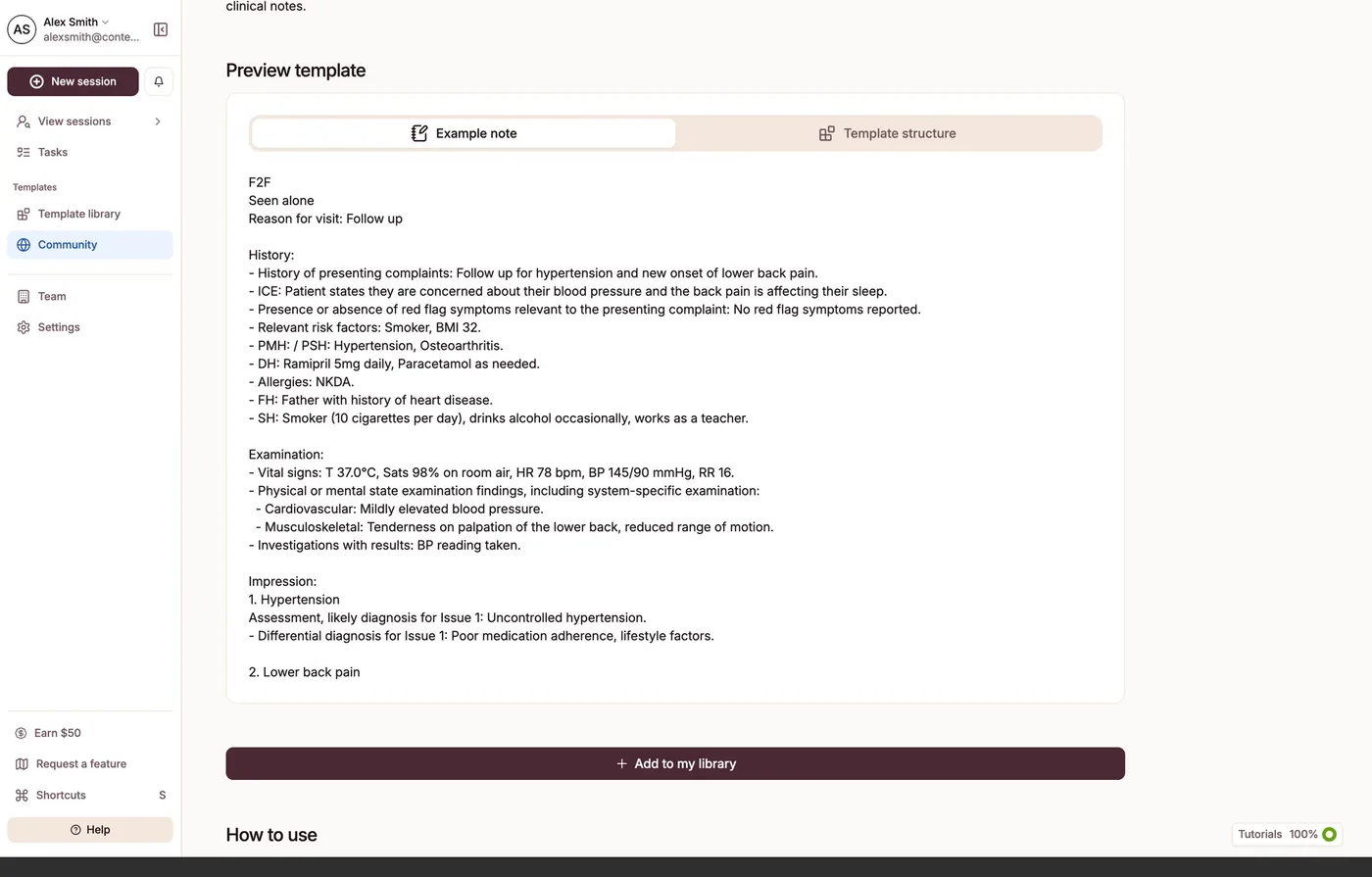
Preview before you adopt
Before you add a template, you can see both a fully worked example note and its underlying structure, with a short note on how to use it. This is exactly right. Adopting a clinical template blind is risky; this pattern lets the clinician judge before they commit, and builds confidence at the moment it matters. It is a small thing, done well.
- The lens
- Support judgment; protect agency
- What works
- Example plus structure, before commitment.
- What I'd propose
- Keep it, and extend the same rigour to trust: show who authored the template, when it was last reviewed, and whether it has been clinically verified, right here where the decision is made.
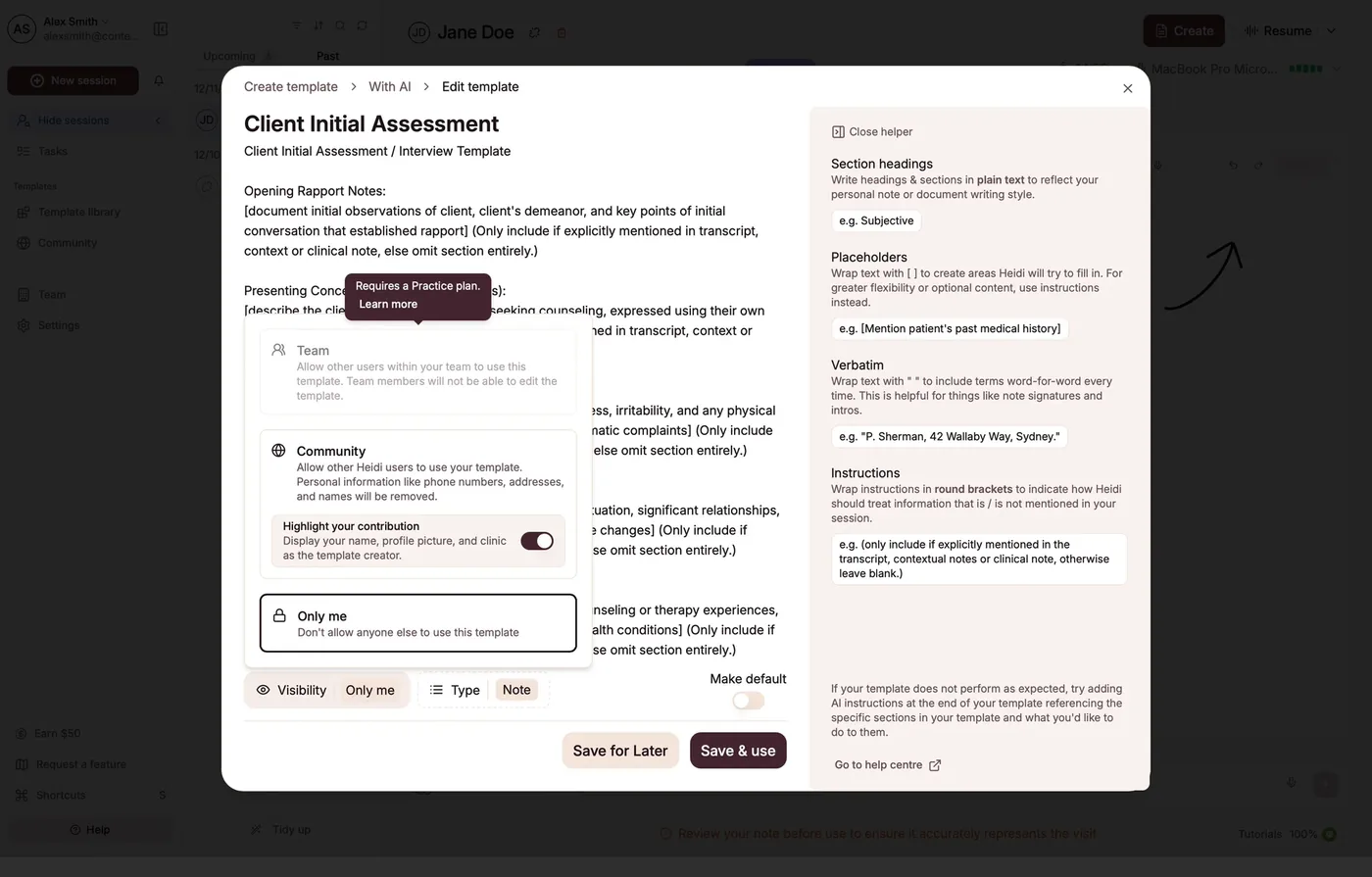
Authoring is a different, denser product
Editing a template opens a dense modal: section headings, field-level control, visibility between Only me and Community, personalisation. The power is real, and it is exactly what advanced users praise. It is also a step-change from the warm, one-button scribe, so for a moment the product feels like two different hands. Most clinicians want to tweak a heading, not architect a document, and the front door currently meets everyone as a power user.
- The lens
- The product should feel like one coherent hand
- What works
- Deep, field-level control.
- The opportunity
- Power-user complexity as the default.
- What I'd propose
- I'd stage the complexity: separate tweaking a template from authoring one, meet the tweaker first, and reveal full authoring progressively. Keep all the power; let it open up as the clinician reaches for it, so the entry point stays as calm as the scribe.
Where I'd start
- 01
Make provenance part of the template experience. For clinical content, popularity is a start; I'd explore surfacing authorship and review, and letting organisations curate, as the library scales.
- 02
Stage the authoring complexity. Tweaking and authoring are different jobs. The editor doesn't need to be the front door for a clinician adjusting a heading.
- 03
Invest in discovery. The library is becoming a platform. It deserves real search, trust signals, and curation before it sprawls.
Templates is where Heidi becomes a platform rather than a tool, and platforms grow fast. The pieces are individually well-made; the opportunity is to keep coherence and trust scaling alongside community-authored clinical content. That is design at the content level, not just the screen level, and the right thing to get ahead of.
The review
The detailed design review