07 · Where I'd take it · Heidi web
Where I'd take it
Six sections of looking closely, distilled to the few moves that matter most. Not a backlog. A direction.
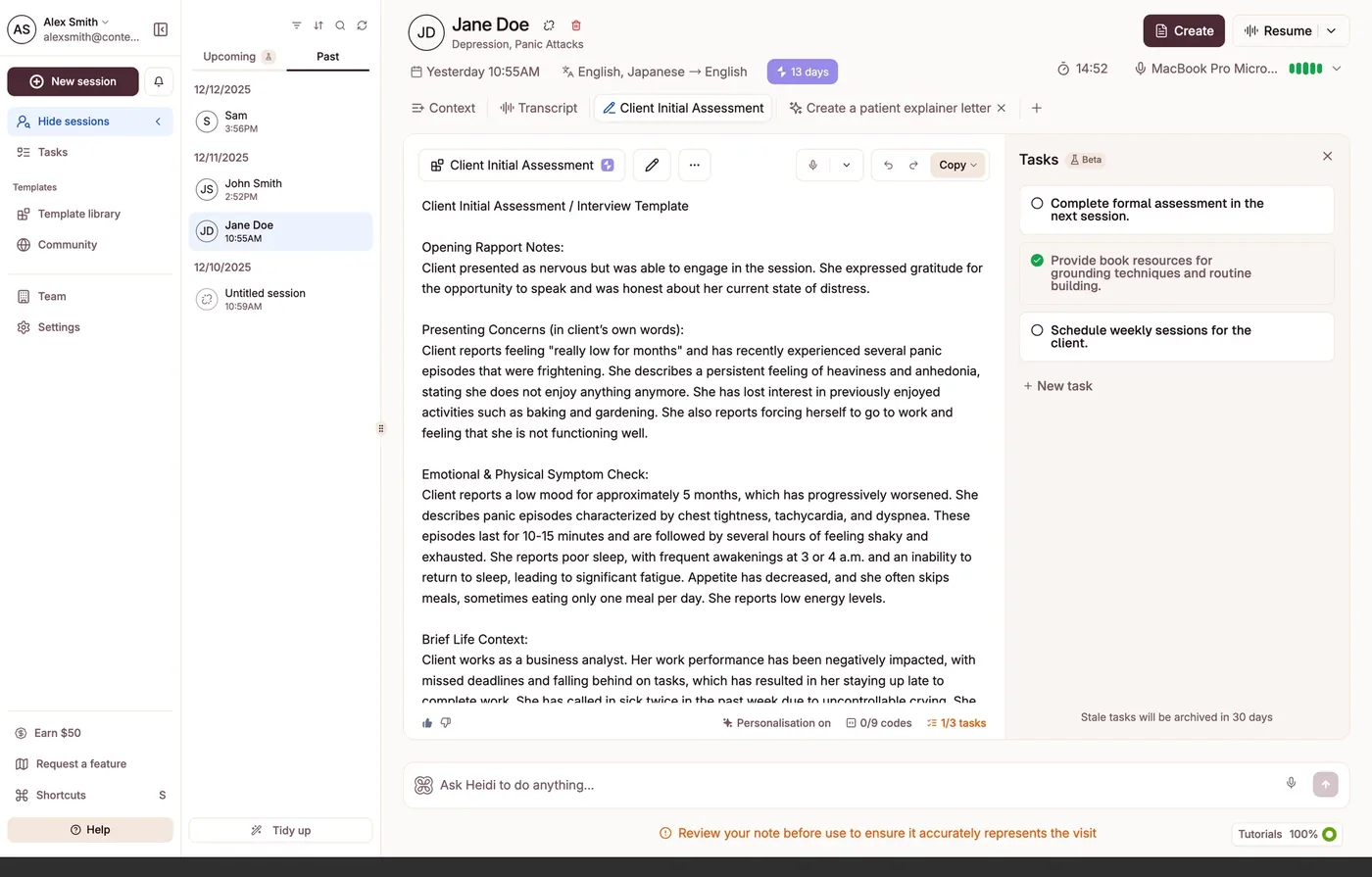
Heidi is one of the rare products worth giving a career to. It already gives hundreds of thousands of clinicians their time back, and it is most of the way to feeling like the work of one person. The work ahead is not more polish, screen by screen. It is to make the whole product hold the line the core already holds, as it grows from a scribe into the clinical day. Five moves carry most of that.
- 01
Make trust the spine
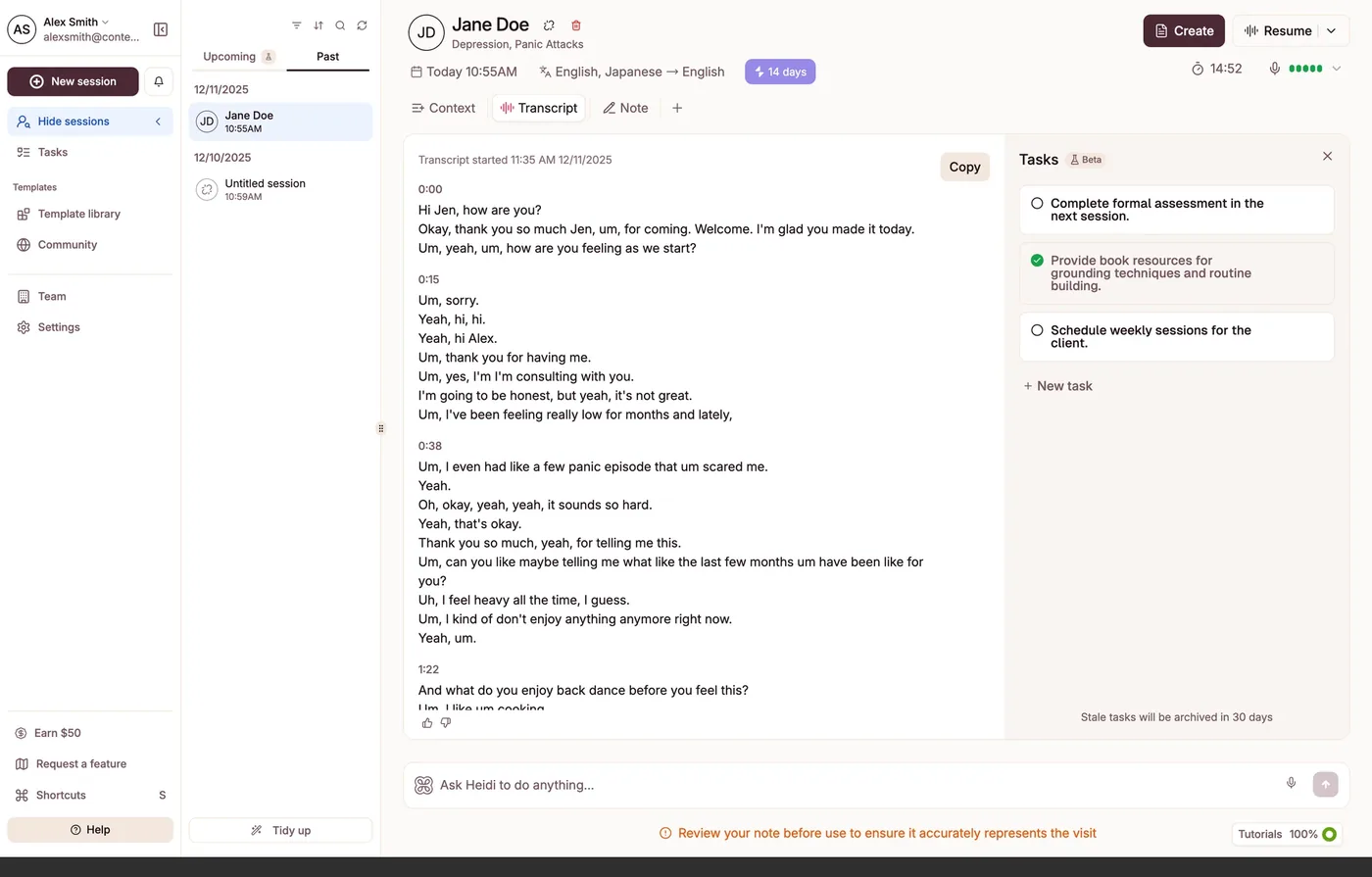
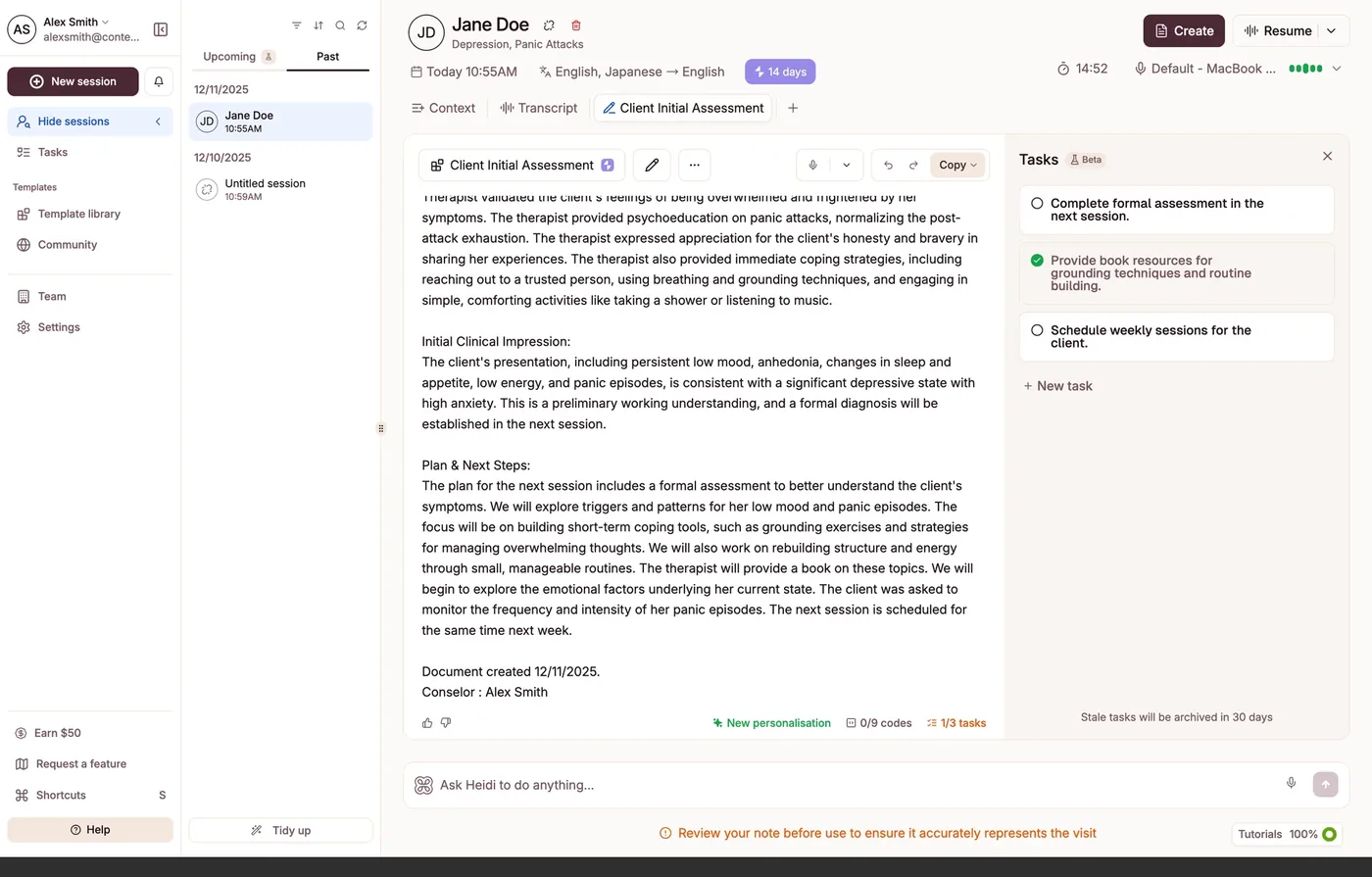
For an AI care partner, losing a visit is existential, not a bug ticket. Recovery, version history, and a constant saved-and-synced signal are not features; they are the foundation everything else stands on. I would build them first, and treat the clinician’s confidence in the product as a designed outcome.
- 02
Fund the system as infrastructure
The reason the sprawl beyond the note has not yet hurt is that one shell is being reused. That is fragile if it depends on heroics. I would make the design system an explicit, owned investment: tokens, patterns, and guardrails that make the coherent choice the default for every designer, PM, and model that ships.
- 03
Name the unit, then redraw the map
Heidi is becoming an AI care partner for the whole clinical day, but the architecture still orbits the note. I would decide, on purpose, that the day is the unit, and let the information architecture follow, with the note as one valuable output among several rather than the room everything hangs off.
- 04
Keep commerce out of the moment of care
The product is loved because it gives clinicians their time and attention back. An upsell in the moment of care quietly spends that goodwill. I would monetise generously everywhere else and keep the surfaces a clinician touches with a patient clean, calm, and free of the sell.
- 05
Treat AI and patient data as design materials
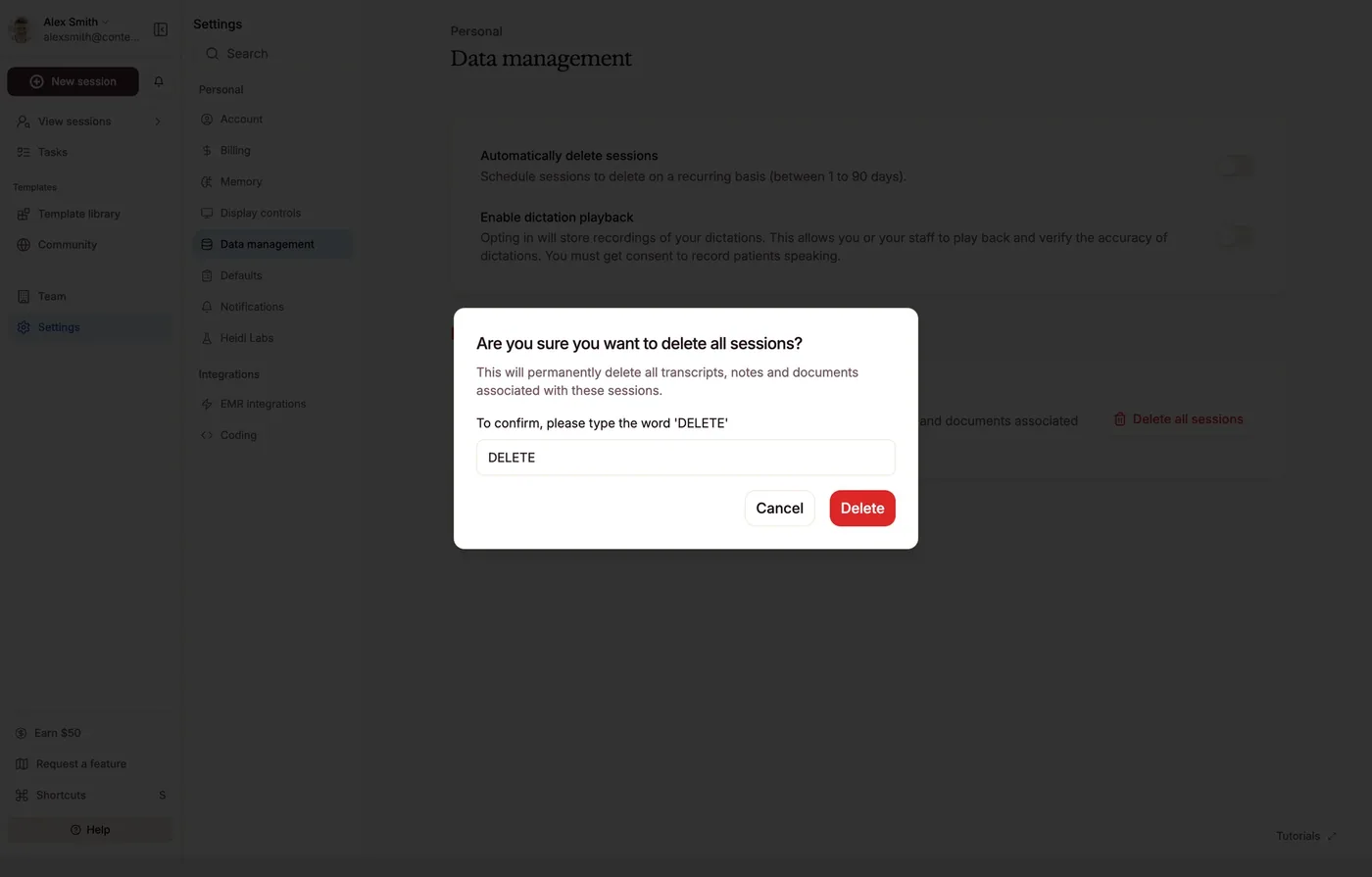
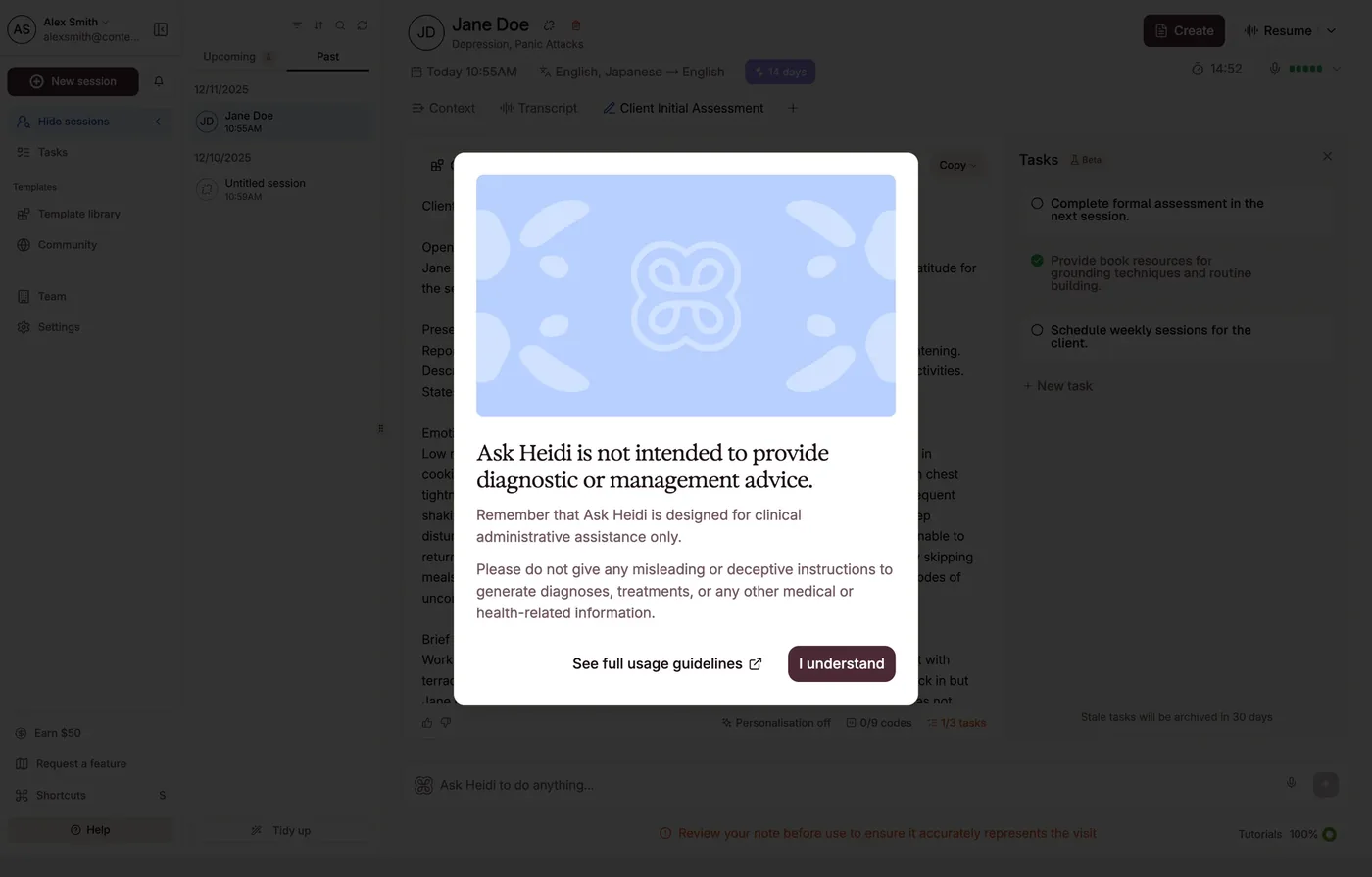
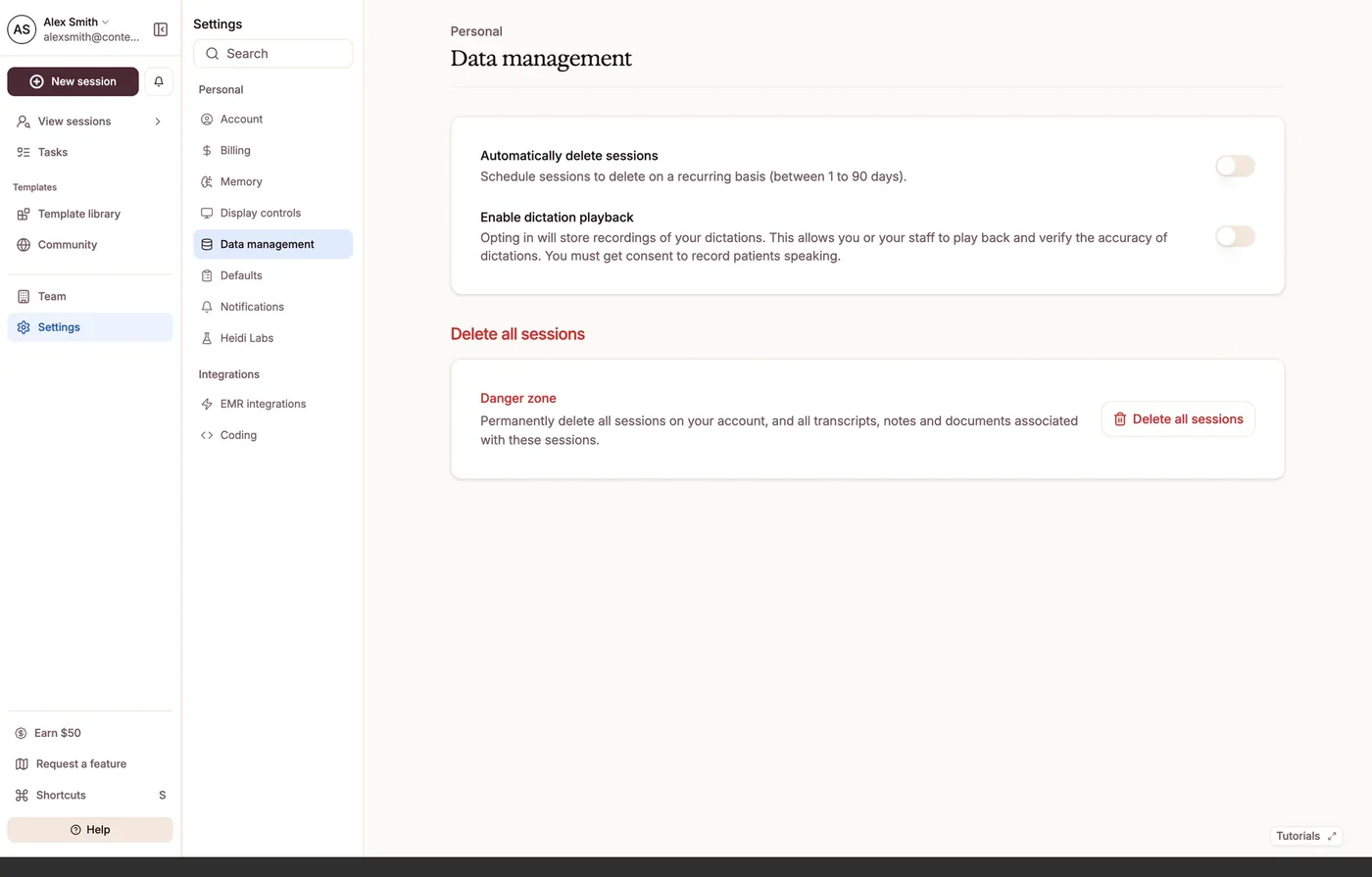
Heidi changes the atomic units of care: a conversation becomes a record, a record becomes a structured object. AI and patient data are not features bolted onto the interface, they are the materials design now works in. I would make provenance, certainty, and the boundary between assistance and advice visible wherever the AI appears, and treat the patient inside the record as a person to protect rather than data to display. Designed this way, honesty is what lets a time-pressured clinician trust the output without re-verifying everything, which is the only way the time saving is real.
Underneath all four is one idea, the same one this whole site argues. A product feels like the work of one person not when one person touches everything, but when taste is encoded into the system, so everyone who ships, human or model, makes the coherent choice by default. Heidi is at the exact moment where that stops being free and starts being the job.
That is the job I want, and the one I have spent twenty years and seven apps learning to do. I would be glad to do it with you.
The review
The detailed design review